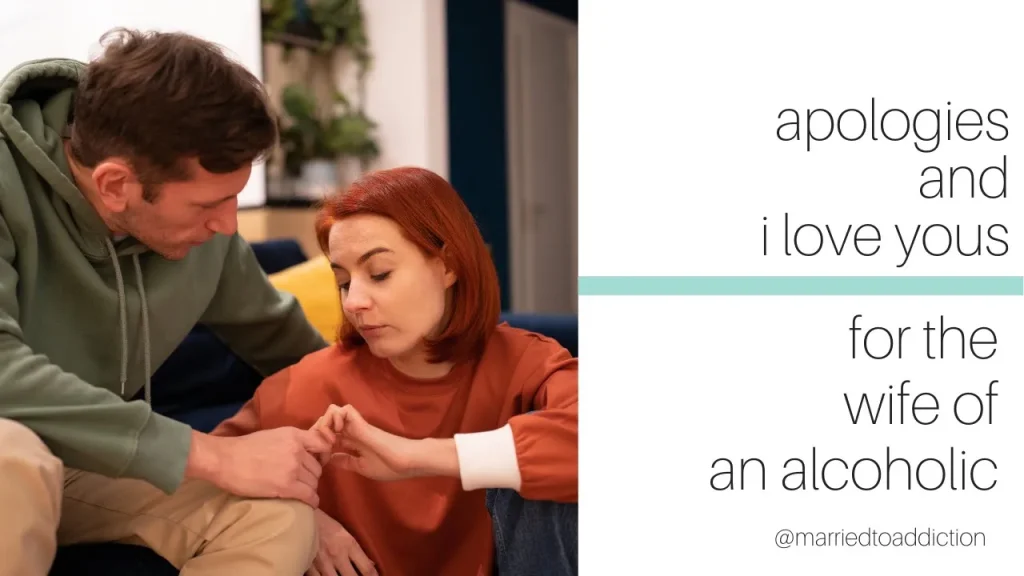
Navigating the turbulent waters of being married to an alcoholic is a journey fraught with emotional complexities.
In this blog post, we delve into the challenging dynamics of apologies and expressions of love from an addicted partner. Through personal experiences and insights gained from experts, we’ll explore how understanding addiction can transform these interactions from feelings of emptiness to meaningful connections.
Have you ever felt that your spouse’s apologies and declarations of love are just words? You’re not alone. Many spouses of addicts experience this. It’s common to feel that these words are insincere, especially when behaviors don’t change. However, understanding the nature of addiction can reveal that these expressions, although often followed by repeated actions, are genuine in the moment.
Real talk: Many of us believe we know all there is about addiction because we live with it daily. But there’s always more to learn. Attending family sessions at treatment centers and listening to recovered addicts can be eye-opening. Discovering the psychological and physical traps of addiction can help us see our loved ones’ struggles in a new light.
If this is something you’re navigating right now, I want to give you something gentle to hold onto in the middle of it.
I created a short, faith-based guide called “When You Feel Like You’re Losing Yourself.” It’s for the wife of an alcoholic who has been so focused on him — on his drinking, his moods, his chaos — that she’s lost sight of herself somewhere along the way.
If that sounds familiar, this was written for you.
Get your free guide: “When You Feel Like You’re Losing Yourself”
When your spouse says they’re sorry or that they love you, they mean it. These moments are genuine attempts to connect and express regret, often coming from a place of shame and guilt. Realizing this can change your perspective, helping you to see that these words are not empty but rather heartfelt attempts to bridge the emotional gap.
Consider this: How would you feel if your prayers for forgiveness were dismissed? We often seek forgiveness knowing we might falter again, yet we hope for understanding. Similarly, recognizing the sincerity in your spouse’s apologies, despite the likelihood of repeated behavior, can foster empathy and compassion.
Learning more about addiction can profoundly impact your relationship with your spouse. Understanding the sincerity behind their apologies and love can transform these interactions into opportunities for connection and healing. As you embark on this journey of understanding, remember that change begins with knowledge and empathy.
If this hit close to home, you’re not alone — and you don’t have to figure it out by yourself.
Before you go — I made something that might help you breathe a little easier today. It’s free, it’s short, and it was written for wives in exactly your situation. Get ‘When You Feel Like You’re Losing Yourself’ here.
Or if you’re ready for a little more you can choose your next small step right here, where you can find quick tools and focused resources built for your hardest moments.
When you’re ready for support that helps you actually move differently through this — not just to understand it better, but show up differently inside of it — the Secret Sisters Circle is where that happens. Private, faith-based, and built for women who are ready for something to finally change. You can even try it free for 7 days.
Also, be sure to join me on the Married to Addiction podcast for more conversations around topics like this one.


